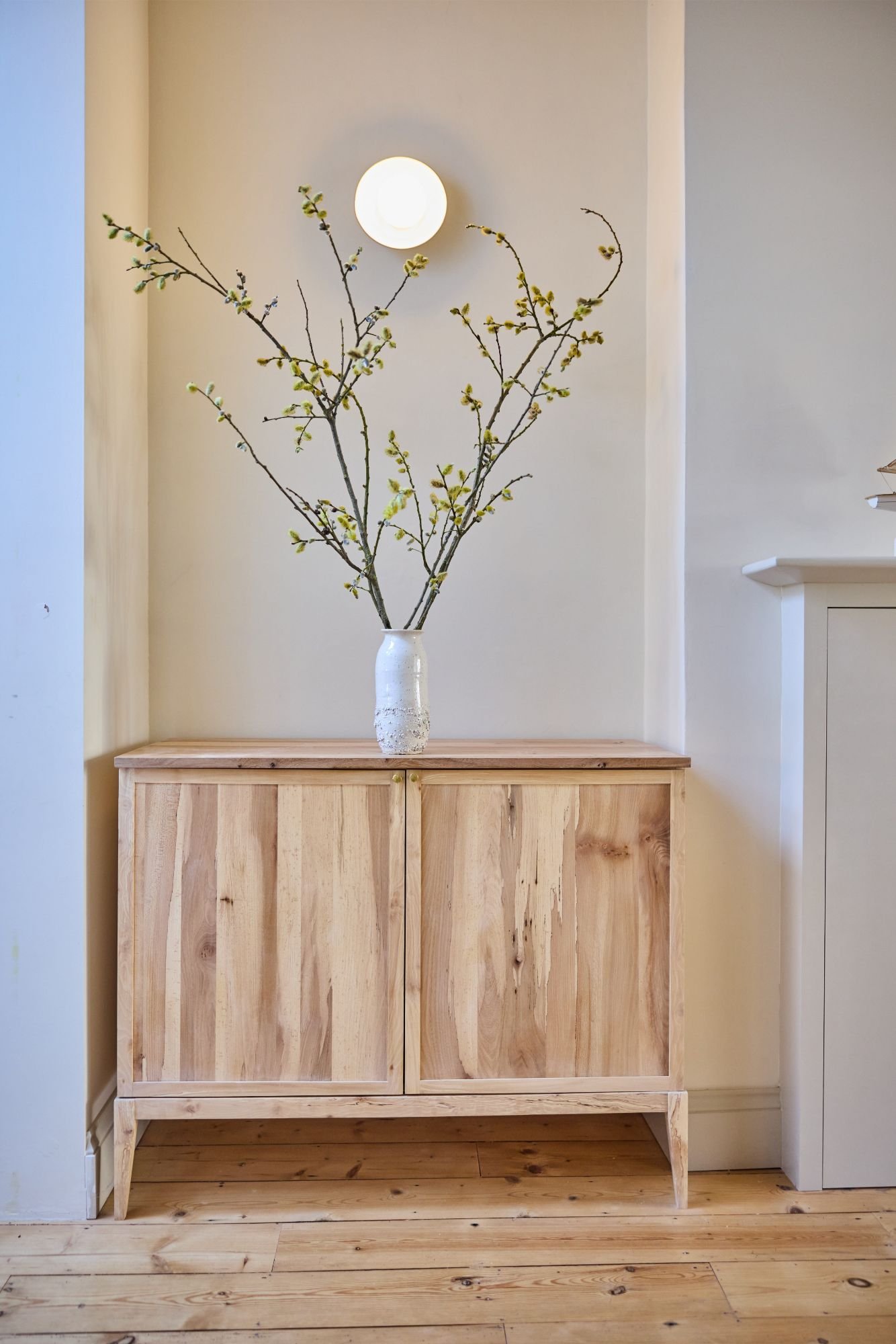
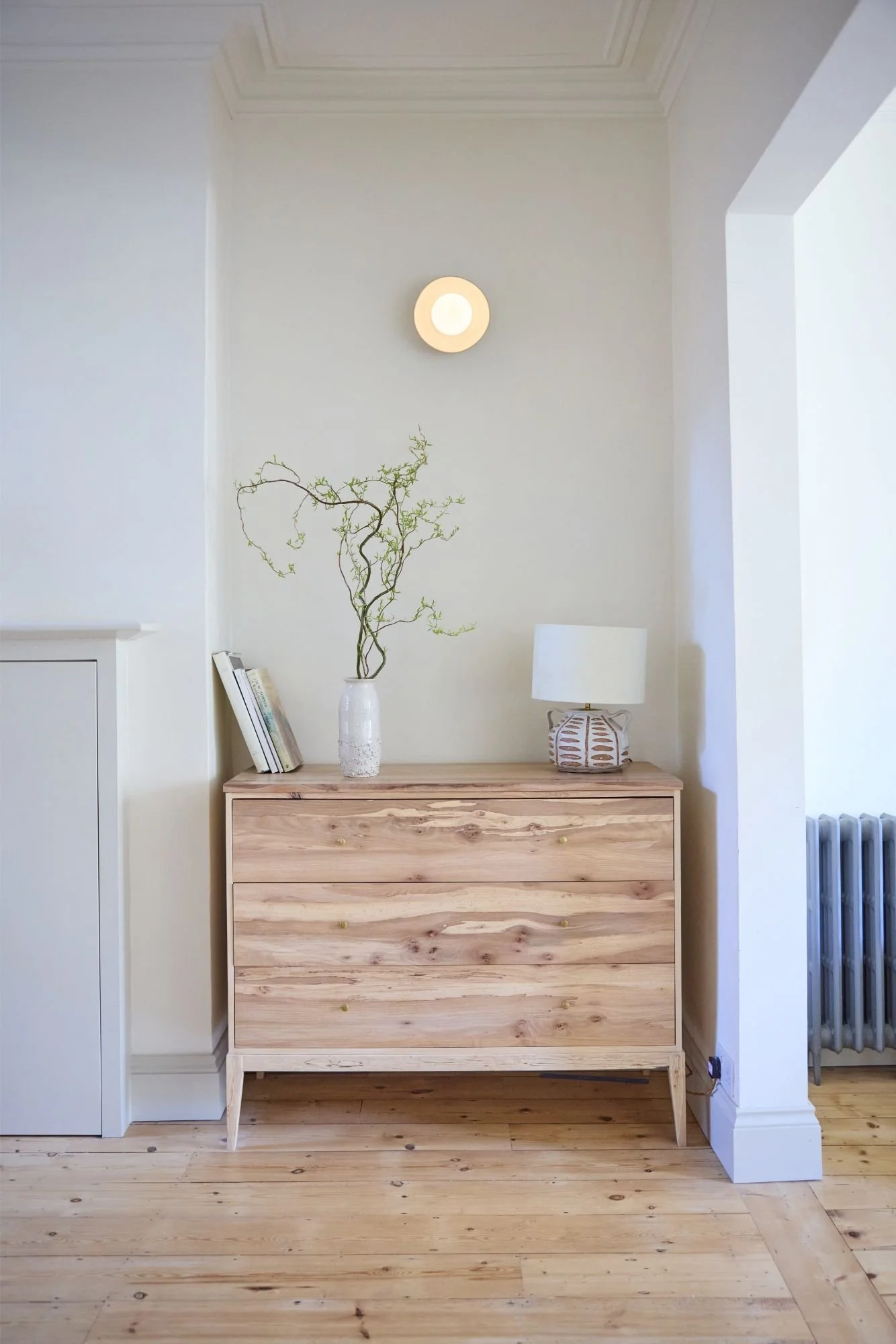
The Thorne Chest of Drawers & The Farrow Cabinet
The Brief
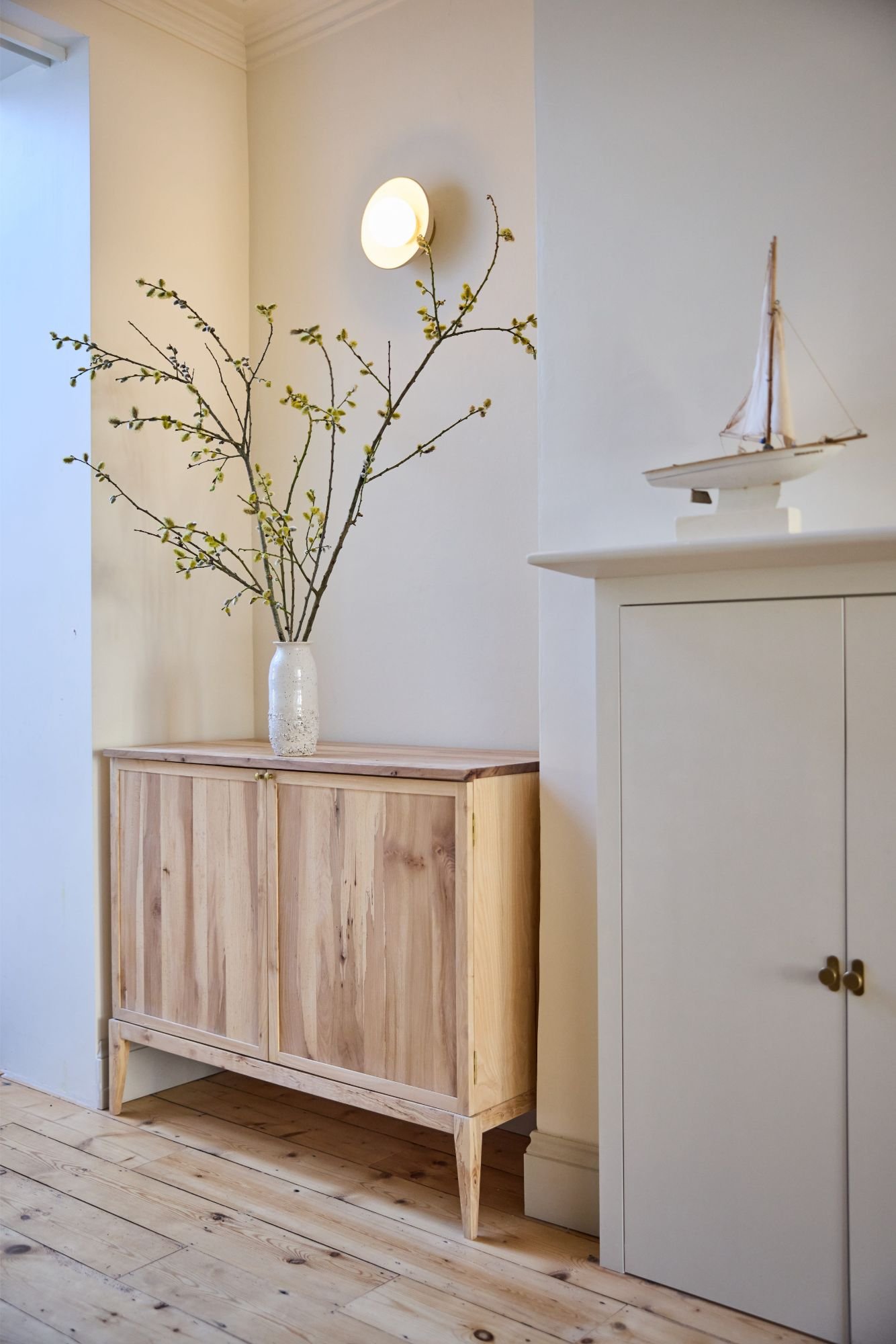
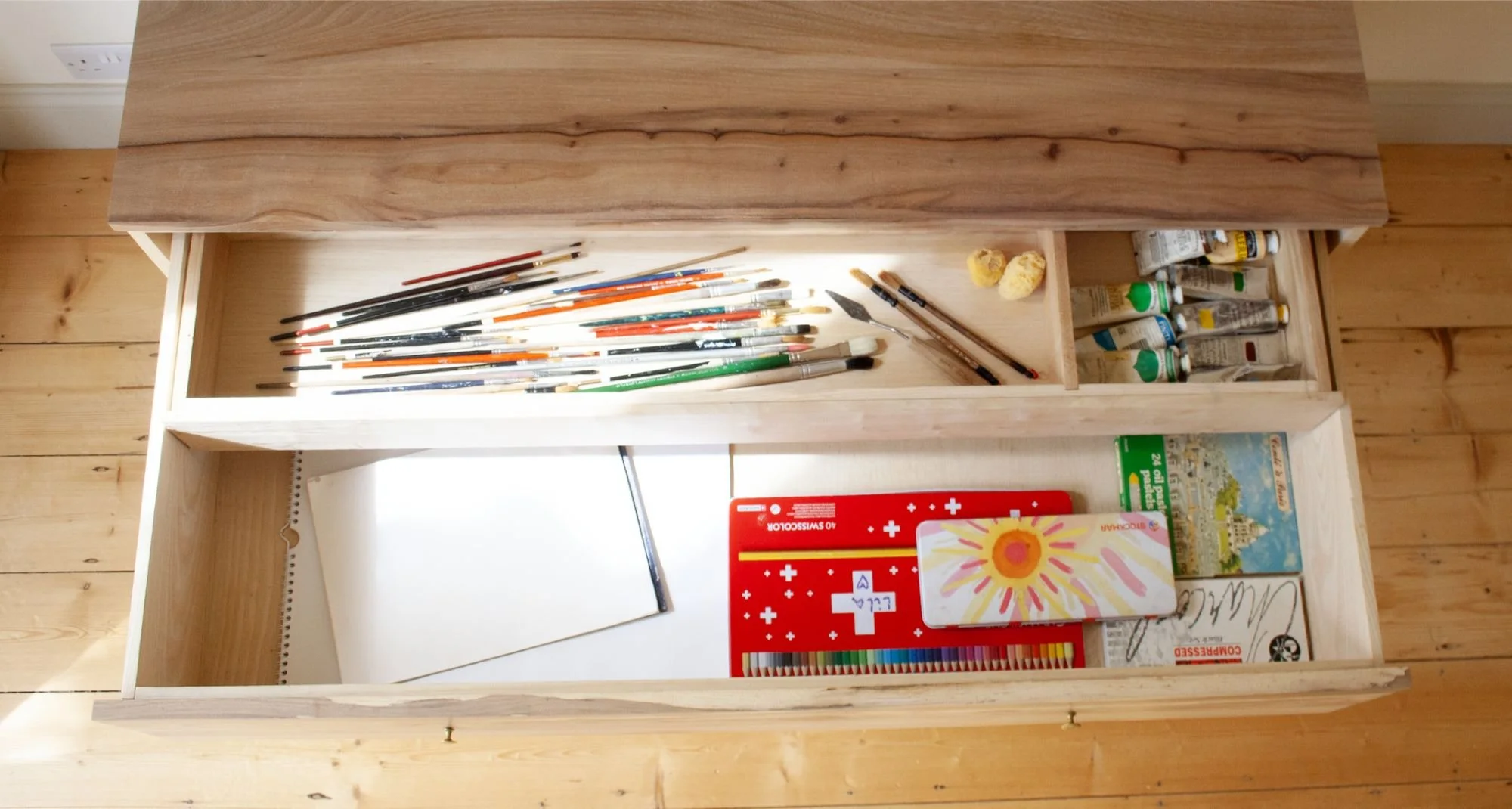
A pair of matching alcoves either side of a fireplace, a layout found in Victorian terraces across the UK, needed a storage solution that could do two different jobs at once: contained, accessible storage for the family's art supplies on one side, and shelving for crockery and pans on the other, without looking like two mismatched afterthoughts bolted into the room.
The Design
Rather than making the pieces identical, the brief called for them to read as a couple, not a twin, two bespoke, handmade pieces clearly designed to sit together, each with enough of its own character to stand alone. Both share a solid ash carcass, a minimal silver birch leg frame and an elm top, so the pairing reads as intentional rather than coincidental. The difference between them was built where form follows function.
The Thorne Chest of Drawers needed to hold the family's extensive art supplies, easy to see and reach for, to avoid the usual chaos of children rifling through drawers for materials. Simple slab drawer fronts let the spalted and pippy (small-knotted) timber do the talking, giving each drawer its own character.
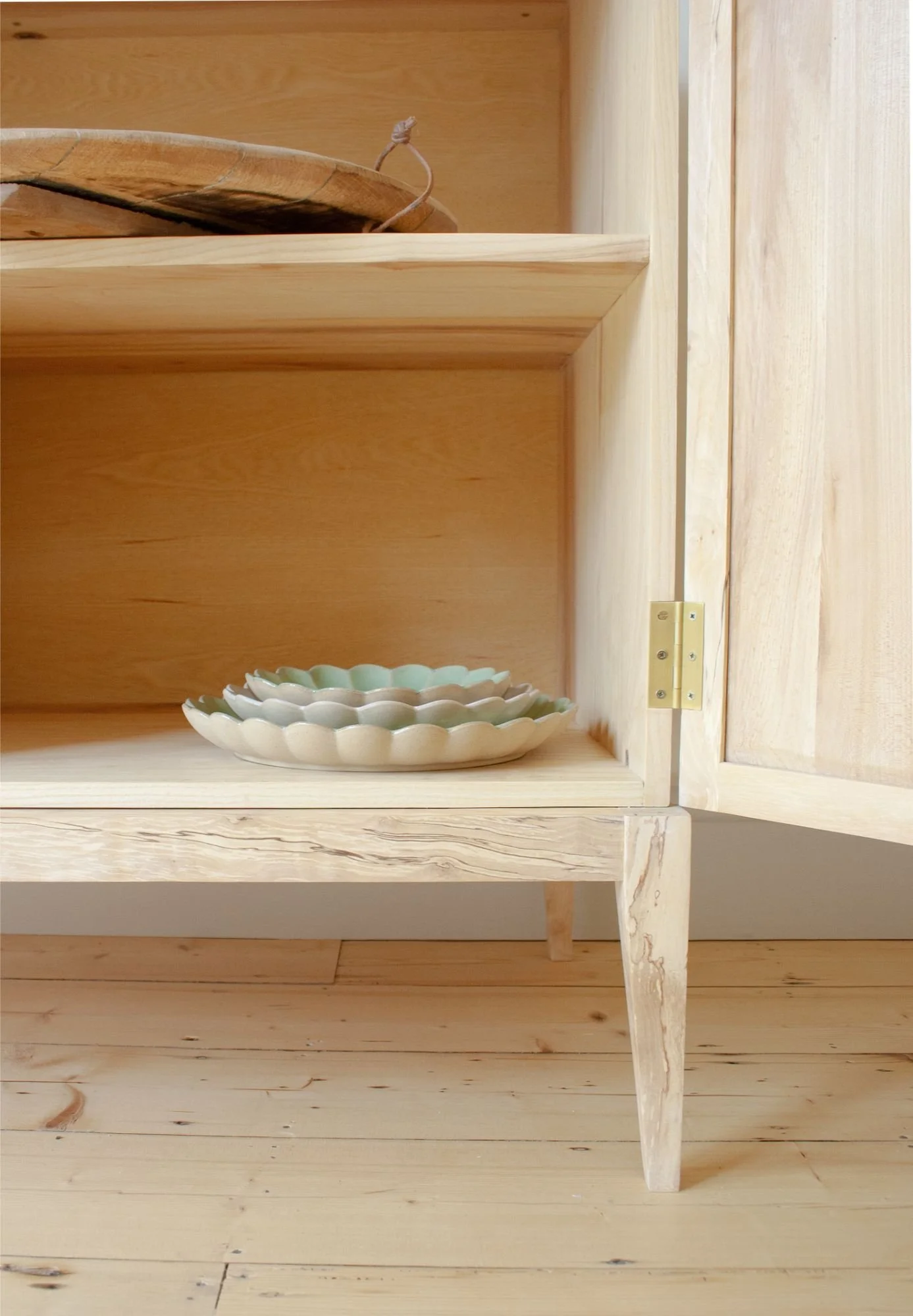
The Farrow Cabinet, built to house spare crockery, needed shelves and dividers sized for pans and larger serving pieces. Shaker-style doors with large spalted elm panels echo the drawer fronts alongside it, while slim shaker frames bring a slightly more traditional feel, reconnecting the piece to the period home it sits in.
The Detail
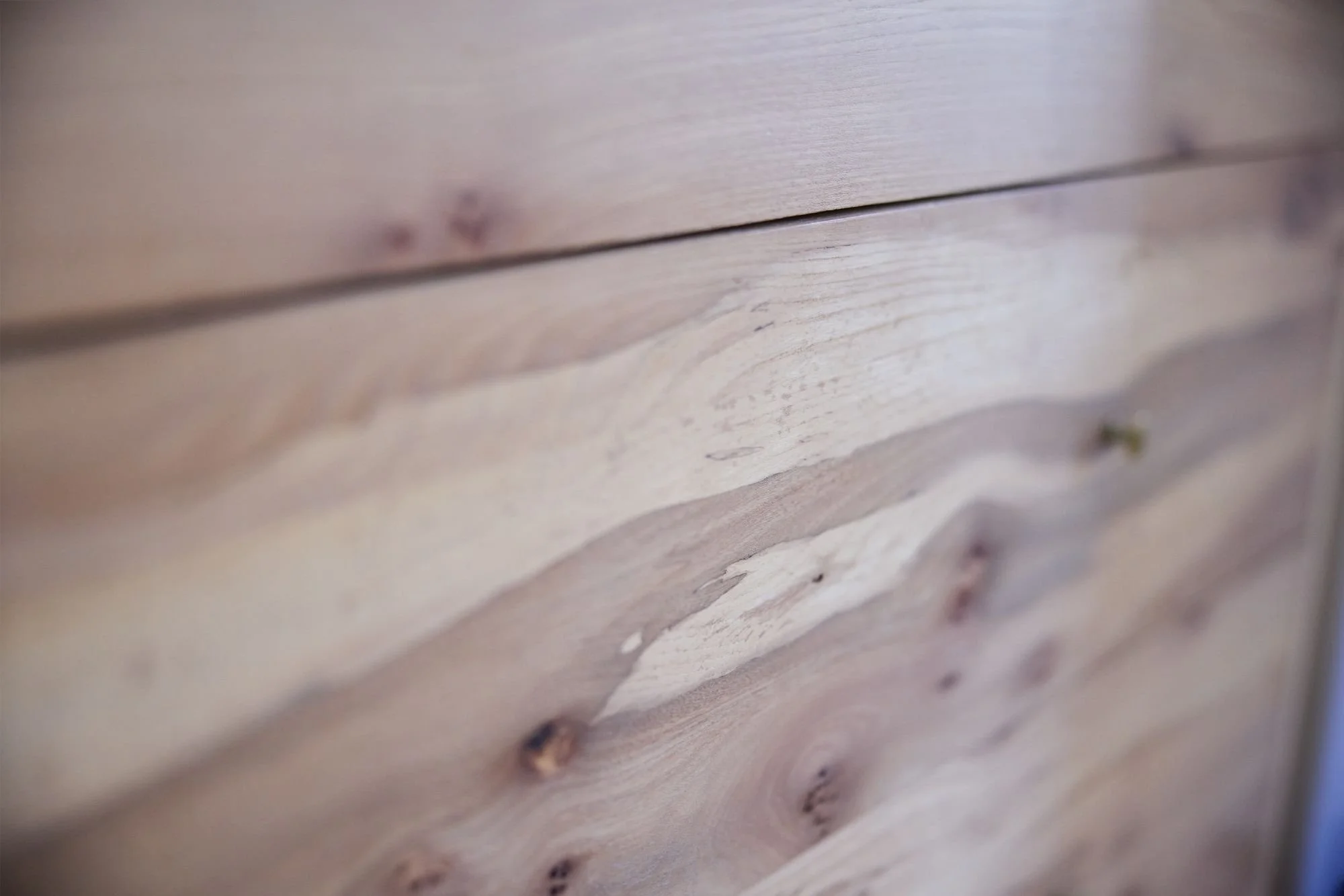
Spalted timber is wood marked with natural dark patterns from early-stage fungal activity in the tree after it's felled, and can't be sourced to a consistent pattern, which is exactly why it was chosen here.: no two panels are alike, and the grain carries more visual interest than a uniform timber ever could.
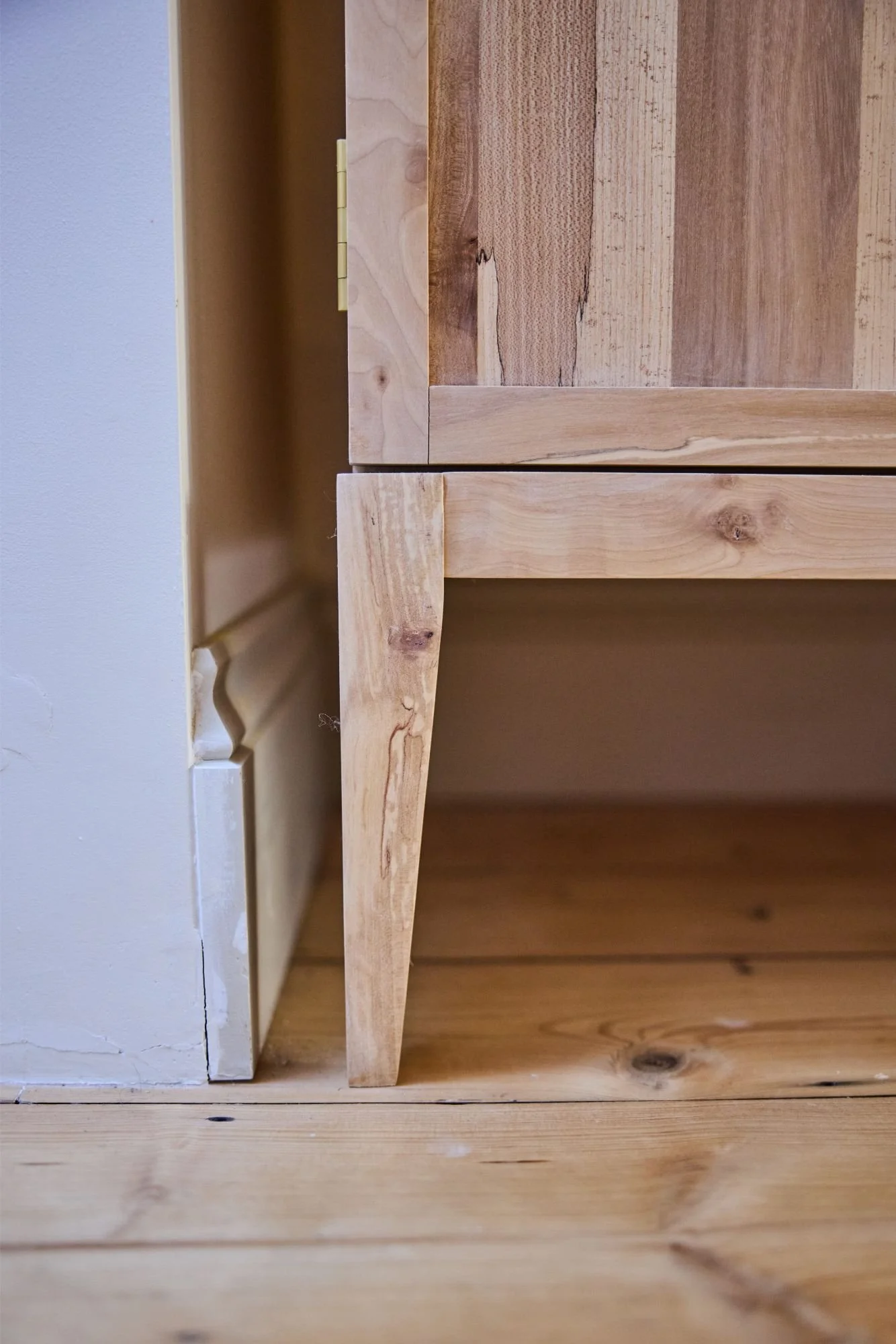
Both pieces were finished with a design intention beyond their first home too — built to sit comfortably in a Victorian terrace, but equally at home standing alone or moving into a different style of interior entirely. As families grow and move, furniture shouldn't be bound to the room it was made for; these two pieces were built to be lived with for a lifetime, wherever that lifetime happens to take them.